Order in the Marketplace: How Igbo Informal Markets Operate as Economic Institutions
freepik.com
Contrary to perceptions of chaos or informality, the major Igbo markets of Onitsha, Aba, and Nnewi are sophisticated economic systems governed by deeply rooted cultural, social, and organizational norms. These markets function as institutions—facilitating entrepreneurship, trust, and economic resilience in ways often misunderstood or overlooked.
Igbo markets such as Onitsha, Aba, and Nnewi are often characterized as chaotic or unregulated, yet a closer examination reveals a complex web of institutional practices, social structures, and economic innovation. Drawing on historical and contemporary evidence, this article explores how these markets serve as self-regulating economic systems, challenging prevailing misconceptions and highlighting their vital role in Nigeria’s commercial life. By understanding the institutional logic underlying Igbo markets, we gain insight not only into Igbo economic success, but also into broader questions of informality, resilience, and African agency.
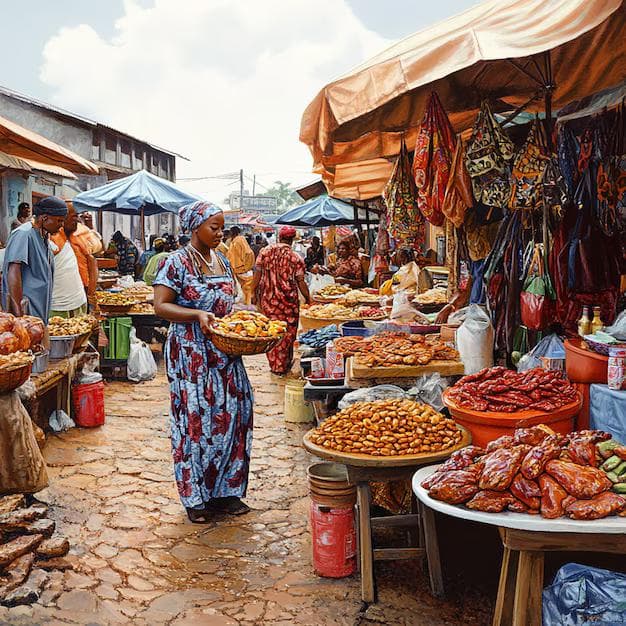
Step into the bustling heart of Onitsha Main Market, the sprawling Ariaria Market in Aba, or the dynamic Nkwo Nnewi market, and one is confronted not with chaos but with a vibrant choreography of commerce. Stalls overflow with goods, traders haggle in a chorus of languages, and apprentices dart between customers and suppliers. To the untrained eye, this may appear as disorder or informality—an impression that has shaped much media and policy discourse. Yet, such readings often miss a deeper reality: these markets are not simply unregulated spaces, but complex economic institutions shaped by long-standing traditions, innovative organizational structures, and a communal ethos that has evolved over centuries.
This article explores the institutional logic of Igbo informal markets. We examine how markets in Onitsha, Aba, and Nnewi function as self-governing economic systems, challenging the notion of chaos and illuminating the mechanisms that undergird their remarkable resilience and dynamism.
Beyond Chaos: The Institutional Foundations of Igbo Markets
The tendency to dismiss Igbo markets as chaotic or unregulated reflects both a misunderstanding of informality and a neglect of indigenous institutional forms. As argued in prior Eziokwu.app articles, the Igbo have a long history of technological and organizational innovation, exemplified by the ancient Lejja iron-smelting civilization—an early testament to complex production and distribution networks in the region. The modern marketplace is, in many ways, a continuation of this legacy.
At the core of Igbo markets are informal yet highly structured systems of governance. Each market operates under an elaborate hierarchy: market unions, leadership councils (often led by the 'Onye isi Ahia'), and specialized committees oversee daily operations, resolve disputes, and coordinate collective action. Rules are set and enforced not by state fiat but through communal consensus and social accountability. This institutional order often outpaces formal regulation in its responsiveness and adaptability.
The Role of Trust and Social Networks
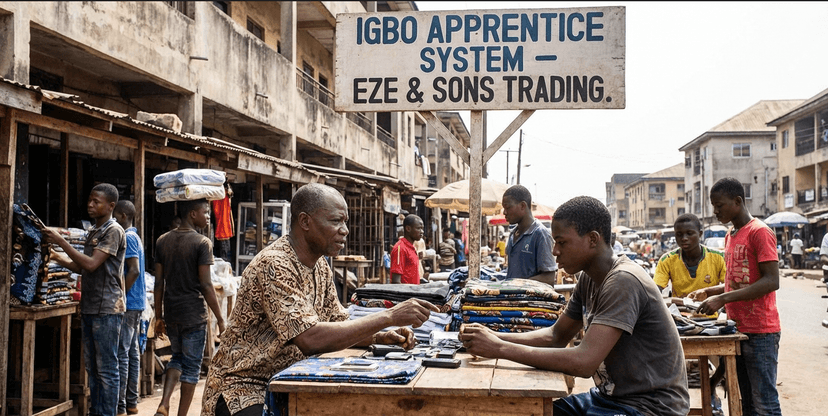
One of the most significant features of Igbo markets is the dense web of trust-based relationships that sustains commercial activity. Trust is not an abstract ideal but a practical necessity, especially in environments where formal legal protections are weak or costly to enforce. The much-celebrated Igbo apprenticeship system (the Igba Boyi) exemplifies this ethos: aspiring entrepreneurs are mentored, trained, and eventually settled with startup capital after years of service—creating a cycle of inter-generational upward mobility and mutual accountability.
This system is not merely a relic of tradition, but a living institution that underpins the vibrancy of Igbo markets. Social networks extend beyond kinship to include town unions, professional associations, and faith-based groups, creating layers of oversight and support. When disputes arise, they are often resolved internally—through negotiation, restitution, or social sanction—rather than through state courts. In this way, what appears as informality is, in fact, a robust framework for contract enforcement and risk mitigation.
Innovation and Resilience: Lessons from Aba and Nnewi
The markets of Aba and Nnewi provide instructive case studies of institutional adaptation and economic innovation. Ariaria Market in Aba, sometimes called "the China of Africa," is renowned for its manufacturing clusters that produce shoes, textiles, and electronics, often reverse-engineering imported goods to meet local demand. Here, informal organizations coordinate bulk purchasing, shared infrastructure, and even collective bargaining with authorities.
Nnewi, meanwhile, has become synonymous with indigenous industrialization. Largely without government support, Nnewi entrepreneurs have built a thriving auto parts industry, leveraging rotating savings associations (esusu), apprenticeship networks, and informal credit channels. These mechanisms allow for rapid mobilization of capital and knowledge transfer—functions typically associated with formal institutions.
Challenging the Narrative: Informality as Agency, Not Deficit
The portrayal of Igbo markets as chaotic or unregulated is not merely a misreading, but often carries deeper implications. As explored in previous Eziokwu.app articles, negative stereotypes about Igbo economic life have sometimes been weaponized to deflect government responsibility or to scapegoat entire communities for broader social challenges. Such narratives obscure the reality that informality, in the Igbo context, is not a sign of institutional absence but of institutional difference—a product of adaptation to historical marginalization, weak state capacity, and the need for communal self-reliance.
Indeed, the success of Igbo markets has often emerged in spite of, rather than because of, official policies. Periods of political instability, civil war, and economic neglect have forced Igbo communities to develop autonomous systems of economic governance. Yet, far from being isolated, these markets are deeply embedded in national and international trade networks, contributing significantly to Nigeria’s GDP and serving as engines of employment and innovation.
Multiple Viewpoints: Balancing Benefits and Challenges
Of course, no institution is without its contradictions. Critics point to challenges in Igbo markets such as congestion, infrastructure deficits, and occasional breakdowns in dispute resolution. Some argue that informality can facilitate tax evasion, regulatory avoidance, or even illicit activity. These are valid concerns, and they highlight the need for ongoing evolution and engagement with state structures.
At the same time, there is a risk in viewing formalization as a panacea. As numerous studies show, attempts to impose top-down regulation without understanding local institutional logics can undermine the very mechanisms that make these markets resilient. A balanced perspective recognizes both the strengths of Igbo market institutions and the value of constructive state-market partnerships that build on, rather than displace, indigenous practices.
Historical Roots and Future Pathways
The institutional character of Igbo markets did not emerge overnight. It draws upon centuries-old traditions of communal governance, collective labor, and technological ingenuity. From the precolonial era—when Igbo towns were organized around federated assemblies and market days regulated social life—to the present, the principles of autonomy, reciprocity, and accountability have been central.
As Nigeria and Africa more broadly grapple with questions of economic inclusion, job creation, and poverty alleviation, the Igbo market model offers important lessons. It demonstrates that informality, far from being a barrier to progress, can be a source of innovation and social cohesion when grounded in strong institutional norms. The challenge for policymakers is to recognize and support these systems, rather than seeking to replace them with imported models that may not fit local realities.
Conclusion: Seeing Beyond the Surface
To label the great Igbo markets as chaotic is to misunderstand both their structure and their significance. Onitsha, Aba, and Nnewi are not merely sites of trade, but living institutions—products of history, community, and adaptation. They remind us that order does not always wear the clothes of formal bureaucracy; it can also emerge from the bottom up, shaped by local knowledge and collective agency.
Understanding the institutional logic of Igbo informal markets challenges simplistic narratives and opens space for more nuanced, respectful engagement with Nigeria’s diverse economic landscapes. In doing so, we move closer to a vision of development that is both inclusive and authentic—one that builds on the strengths of communities rather than erasing them.