Against Simplification: Responsible Narratives and Igbo Accountability in Nigerian Affairs
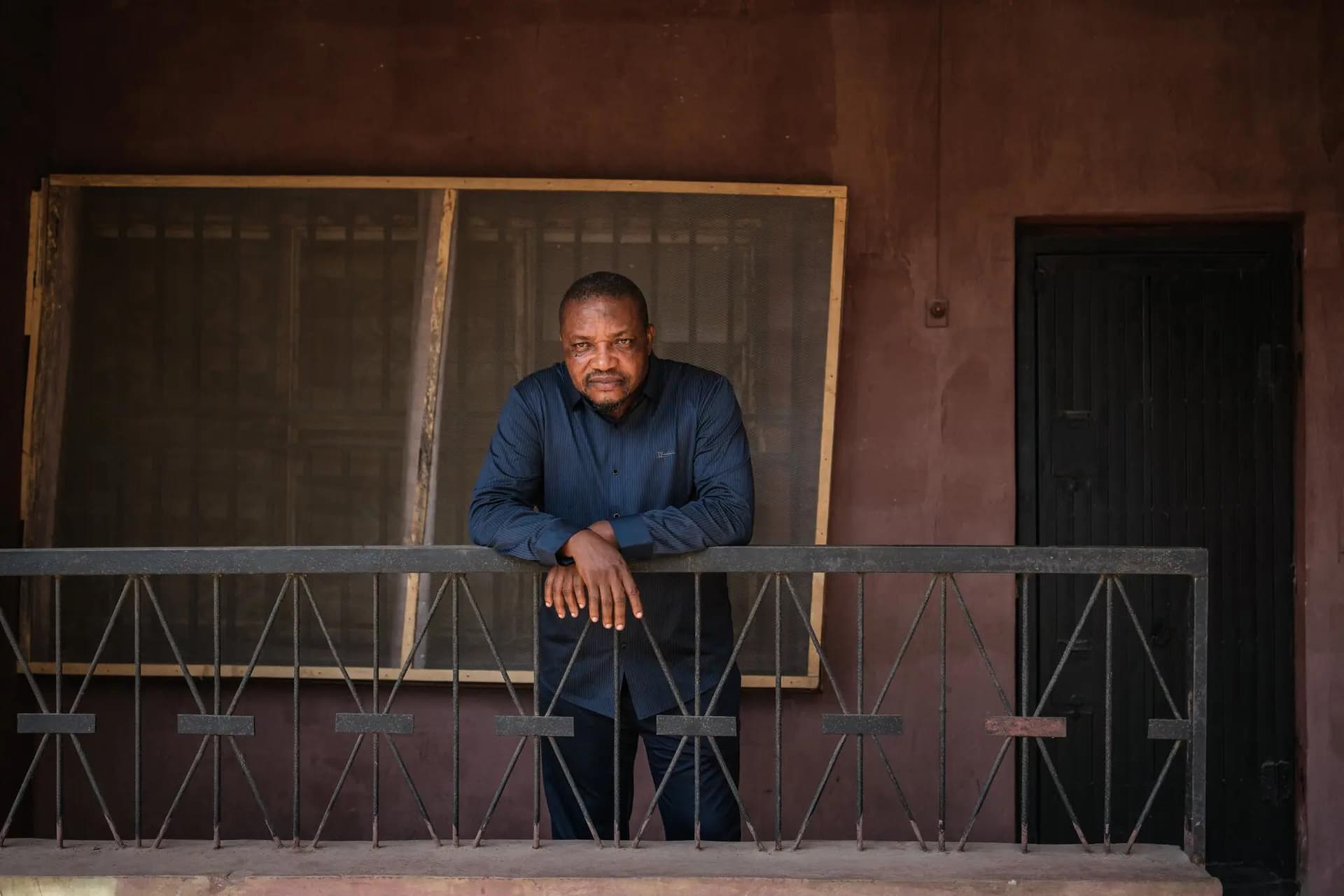
New York Times
Reducing complex state actions to the influence of individual civilians distorts reality and risks ethnic scapegoating, particularly when media narratives focus blame on Igbo actors while obscuring governmental responsibility. Responsible journalism demands factual rigor, historical awareness, and an unwavering commitment to institutional accountability.
Recent media coverage, including the New York Times article on Emeka Umeagbalasi's research and its purported role in U.S. airstrikes on Nigeria, frames a dangerous narrative: it personalizes blame and risks ethnic scapegoating, especially against Igbo individuals. This editorial corrects the record by restoring context, emphasizing institutional responsibility, and warning against repeating historical patterns of targeting ethnic minorities for state actions. Only through truth, evidence, and accountability can we foster a more just and stable Nigeria.
Recent media reporting, typified by The New York Times article “How a Screwdriver Salesman Helped Fuel U.S. Airstrikes in Nigeria,” has advanced a troubling narrative: that the actions of one civilian, Emeka Umeagbalasi, and his 'spotty research,' catalyzed international military intervention. By foregrounding his Igbo ethnicity and background, and by failing to robustly situate his actions within the broader context of Nigerian state responsibility and international politics, the article risks reducing a complex, multi-actor crisis to the actions of a single individual—an approach that is both intellectually unsound and historically fraught with risk for minority communities, especially the Igbo.
2. Context: Historical Patterns and the Dangers of Ethnic Blame
In Nigeria, the consequences of misattributed blame are not merely theoretical; they are lived realities with roots in the country’s history of ethnic fragility and scapegoating. Throughout the nation's history, from the 1966 pogroms to the aftermath of the Biafran War, the Igbo have often found themselves unfairly blamed for state actions, political outcomes, or social crises. When prominent media outlets personalize state failures or international interventions by singling out individuals—especially from historically targeted groups—the narrative frequently scapegoats minorities and shifts public scrutiny away from those truly responsible: state institutions and their leaders.
In the specific case at hand, there is a long-established pattern of the 'Christian persecution' narrative being strategically amplified by various Nigerian actors, including political elites from multiple regions and faiths, for both domestic and international purposes. Prior reporting—both in Nigerian media and international outlets—has documented how opposition leaders, now in government, themselves promoted this narrative to gain political leverage and Western sympathy well before the current crisis or the rise of Umeagbalasi as a cited source.
3. Analysis: What the Current Narrative Gets Wrong3. Analysis: What the Current Narrative Gets Wrong
The New York Times article commits several analytical missteps that must be addressed. First, it personalizes the origins of U.S. airstrikes in Nigeria, implying that Umeagbalasi’s unverified data singularly motivated powerful foreign actors. This is not only an oversimplification of international policy-making, but it also shifts public focus away from the Nigerian government’s own role: official statements from Abuja confirm the state provided intelligence and cooperated with the U.S. in these military actions.
Second, the article amplifies and rebroadcasts Umeagbalasi’s inflammatory rhetoric regarding the Fulani, repeating his words about ethnic cleansing without adequate contextual rebuttal or critique. This risks validating dangerous ethnic stereotypes and escalating communal tensions, particularly in a country with a history of violence along such lines.
Third, the piece largely omits the broader context in which the 'Christian persecution' narrative has been deployed. It ignores the reality that credible international organizations and Nigerian researchers have, for years, documented targeted violence against both Christians and Muslims, and that the narrative is neither new nor solely the product of fringe or unverified sources. By failing to mention this, the article skews the historical and political context, contributing to a misleading impression that the problem is recent, external, and driven by individual activism rather than long-standing, institutional, and multi-actor dynamics.
4. Correction: Reinstating Context and Factual Accuracy
To correct the record U.S. airstrikes in Nigeria were not initiated solely on the basis of Emeka Umeagbalasi’s reports. Official Nigerian government statements, as reported in The Guardian and corroborated by other outlets, confirm active state collaboration and intelligence sharing with the U.S. government. This institutional role is central and cannot be obscured by focusing on civilian actors.
- The 'Christian persecution' narrative in Nigeria has deep roots and has been used by both Christian and Muslim political elites for decades. As established in prior articles, opposition politicians—now in power—were among the first to internationalize this framing for political purposes, especially during the Jonathan administration. This is not a new or externally manufactured phenomenon.
- Umeagbalasi’s methods and figures are indeed questionable, as the article establishes; however, the implication that all claims of anti-Christian violence are thus suspect is false. Independent monitoring groups such as the Armed Conflict Location and Event Data Project (ACLED) and reputable Nigerian researchers confirm that both Christians and Muslims have been victims of targeted violence, often at the hands of state and non-state actors alike. The scale and religious character of such violence remains contested, but its reality is not.
- When quoting or referencing inflammatory rhetoric—such as calls for confinement of an entire ethnic group—responsible journalism must provide clear, contextual rebuttal and foreground the dangers of such language. Failure to do so risks amplifying hate and inviting collective blame, with potentially deadly consequences in Nigeria’s volatile environment.
5. Defense: The Igbo and the Dangers of Misattributed Blame
It is essential to state, clearly and without equivocation, that Emeka Umeagbalasi does not represent the Igbo people, nor do his statements or research methodologies reflect the standards or values of the wider Igbo community. Throughout Nigeria’s history, the Igbo have repeatedly been made scapegoats for political and social upheaval, often through the same media mechanisms that personalize blame and obscure institutional responsibility. To suggest, directly or indirectly, that an entire ethnic group is responsible for state or international actions is not only intellectually indefensible; it is morally hazardous and historically discredited.
When media narratives focus blame for complex national or international events—such as U.S. airstrikes—on individual civilians, particularly those from minority communities, they perpetuate a cycle of scapegoating that has, in Nigeria’s past, led to tragic outcomes. The Igbo, like all Nigerians, are civilians with no agency over state military decisions, whether those decisions originate in Abuja or Washington. Responsibility for actions of state violence, intelligence sharing, or international diplomacy lies squarely with those in government—elected officials, security agencies, and institutional actors—not with ordinary citizens or advocacy groups.
Moreover, efforts to conflate the research, rhetoric, or activism of one Igbo individual with the collective will or actions of the Igbo are both factually baseless and reminiscent of the same patterns of ethnic targeting that have caused so much harm in Nigeria’s past. Such narratives must be firmly rejected, not simply for the sake of the Igbo, but for the integrity of public discourse and the stability of the nation as a whole.
6. Conclusion: A Call for Accountability and Responsible Journalism
The danger of reducing complex state actions to the claims or errors of individual civilians lies not in simple journalistic misjudgment, but in the ethnic consequences such narratives produce. In a country as ethnically fragile as Nigeria, the media must resist the temptation to personalize institutional failures or international interventions. Instead, they must hold government and state actors accountable, insist on transparency, and foreground the structural causes of violence and instability.
Responsible journalism is not passive; it is principled. It corrects harmful narratives, demands evidence, and refuses to amplify unverified or inflammatory claims without rigorous scrutiny and context. It does not deflect government responsibility onto civilians or ethnic groups, nor does it repeat historical patterns of scapegoating that have led, time and again, to division and violence.
As we strive toward a more just and peaceful Nigeria, we must insist on truth—not only in what is reported, but in how it is reported. Only by holding institutions to account, rejecting ethnic blame, and demanding responsible, contextualized journalism can we hope to build a future in which all Nigerians, Igbo and otherwise, are respected as citizens, not targets.